

Episode Notes
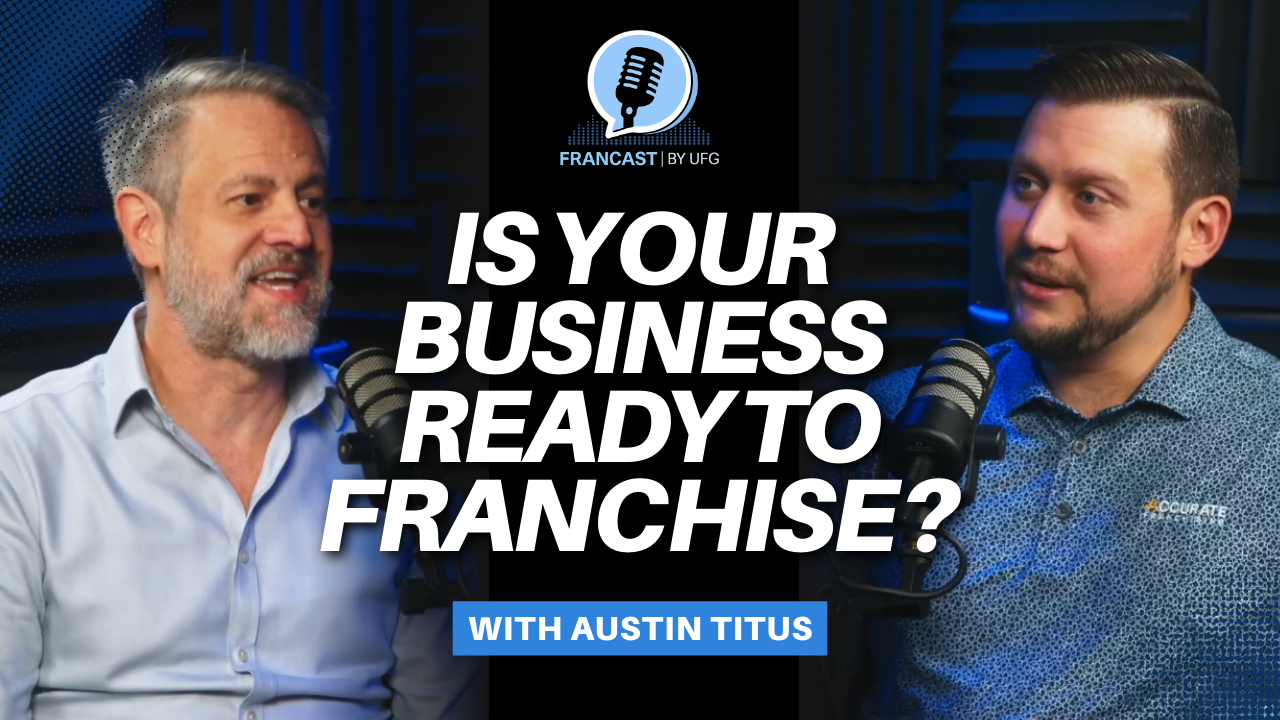
In the debut episode of FranCast by UFG, our host Chad Palmer sits down with Austin Titus, President of Accurate Franchising, for a conversation about what franchising really is and what it takes to turn a successful business into a franchise. Austin breaks down franchising in plain terms, explains how proven business models scale into new markets, and shares why strong systems, documentation, and operator independence are crucial in the process.
We also dig into one of the biggest questions business owners ask: Is my business ready to franchise? Austin walks through the signs of a franchisable concept, the red flags that can hold a company back, and common issues founders need to fix before moving forward, from owner dependency to disorganized financials. He also shares why preparing a business for franchising often resembles preparing for an exit.
To round it out, Austin highlights a few business categories that may surprise listeners, including home services, explaining why some of these models can scale especially well in franchising. If you’re a business owner exploring growth or simply want a smarter understanding of how franchising works, this episode is a strong place to start.
Be sure to follow Austin and learn more about Accurate Franchising.
Featuring

Chad Palmer, Host
Chief Growth Officer at United Franchise Group
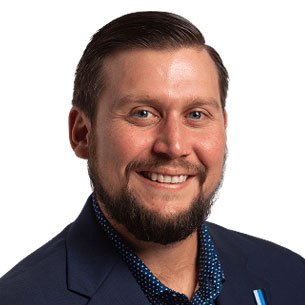
Austin Titus, Guest
Accurate Franchising President
Episode Transcript
Chad Palmer: 00:09
Welcome to FranCast, brought to you by United Franchise Group. I’m Chad Palmer, and today we’re going to be talking about all things franchising, what it is, how it works, and how to think about it the right way with real talk about franchising. Joining me today is Austin Titus, the president of Accurate Franchising. Austin, thanks so much for being here today. Yeah, thanks for having me, Chad. Yeah, appreciate your time. Hey, before we jump in, I just want you to share a little bit about your story. If you could just tell us how you got into franchising and what keeps you excited about franchising.
Austin Titus: 00:36
Yeah, absolutely. So uh a little bit about myself. Uh, you know, I was kind of born into franchising. You know, my father started uh Signarama in 1986 uh and built up Signarama and, you know, through the years in between 1986 and today, has built up many different franchise brands. And, you know, my start really got uh going with Signarama and Fully Promoted locally, you know, working with franchisees and actually understanding the business from that side of things. Uh and then when I got into corporate, all of my background is in franchise sales, franchise marketing, uh, brand leadership, and emerging brands. And so I actually ran our franchise development department for a few years where I oversaw all of the franchise sales advertising side of things. I know you know a lot about that, Chad, and uh became the president of our emerging brands division, where my role was to you know take some of the brands that United Franchise Group was acquiring or had early stages and kind of develop the systems and processes of those brands and help them build those brands up to a certain point. And then once it reached a certain point, I’d you know plug it into one of our divisions and I move on to the next one. So I did that for a few years, ended up becoming the president of a couple of those brands specifically, uh, went through a couple of different exits with some of those emerging brands as well, which kind of led me to where I am today as the president of Accurate Franchising, which if you look at it, all of my background kind of perfectly fits the bill of franchise consulting, franchise development, uh, and building startup and emerging franchise brands. So it kind of a perfect fit for me.
Chad Palmer: 02:14
Yeah, with that that deep background in in history and franchising, it’s just it’s like the perfect setup. It’s great. Yeah, very exciting. Hey, so for listeners that are new to franchising, how would you just explain what franchising is, just in plain English?
Austin Titus: 02:27
Yeah, franchising is essentially taking a successful business model. So a business model that’s been proven to be successful in one market or a couple of different markets and duplicating that in other markets. And so that’s from the consumer side of things and from the franchisor side of things, it’s essentially selling the success that you’ve had, selling that recipe to success that you’ve built over, you know, the last years or many years that you’ve been running this business. And so putting that all on paper, you know, through different training documents and manuals and disclosure documents to where you can present that business as a structure for for that other person to run that business locally in another area.
Chad Palmer: 03:16
Got it. So a lot of people just think that franchising is like just something that you do, like once that you’re huge. Uh in reality, what when does it actually make sense for a business to even just start thinking about franchising?
Austin Titus: 03:26
Yeah, good question. It’s really all over the place when it comes to that. There’s there’s not really a set rule because we’ve seen a lot of success with brands that just have, you know, one location or one business that they’re running in one area uh and they’ve run a successful business and uh they want to scale it, but they don’t want to uh front the money to scale it themselves. They want other people to do it and they want to grow the brand. And so, you know, we’ve seen anything from you know a couple location chains to, you know, very small uh volume businesses franchise successfully because everything is relative, you know, different profitability for different types of businesses and different scalability for different types of businesses. So we’ve seen people franchise side businesses as well. Yeah. Um, but that’s not the majority for sure. Um, but yeah, that it, you know, there’s many different ways to scale it. But what I would say is the most important thing is that, you know, it’s a successful, profitable model that can be scaled. Uh and the the way it could be scaled most successfully is by having another person take ownership of that business in a different area.
Chad Palmer: 04:39
So you kind of mentioned there’s some that just really starting with one location. So for those with like two or three locations, like they’ve just kind of, you know, started to branch out, they’ve started that little hub, if you will, like they’re in this town, then they go to the a nearby town where they have the same customers. Uh, when do you think like that that kind of franchise would be ready or that kind of business would be ready to franchise versus just kind of continue that organic growth?
Austin Titus: 05:02
Yeah, I mean, they would be ready to franchise right away. That’s like the best case scenario. You know, the perfect client, if I had to put that perfect, you know, client, franchise or client in a box, I would say that they do have two to five locations that they’ve opened up themselves and they’ve made it a successful business in multiple different markets. Yeah. And like I said before, that’s not a requirement, but that’s where we have seen the most success, the most success quickly. Because it proves that viability. Exactly. So they’ve already proven it to be true in multiple different markets. Um, so that business is typically ready to be franchised right away.
Chad Palmer: 05:40
Right. So what do you what do you think is the biggest mistake that you see founders make? Like they decide, hey, let’s franchise. What’s like without even maybe even understanding what that means, what’s the biggest mistake you see
Austin Titus: 05:46
Usually the biggest mistake that they’re making is they they treat the business as one business. So what what a lot of people don’t realize is when you decide to franchise your business, you’re creating a separate company. You’re creating a new company. And so now you have two companies. You have Chad’s Ice Cream Shop here, and now you have Chad’s Ice Cream Shop franchise company over here. And they’re completely different businesses. You know, even though they both represent the same brand and they both represent the same end consumer product, they’re completely different structures of businesses. And so this business here, Chad’s Ice Cream, is you’re focused on selling ice cream to great people. And over here, Chad’s ice cream franchise company, your objective here is to help people sell ice cream to people. And so you’re training them and supporting them on how to do that business best, but you’re not the one selling the product.
Chad Palmer: 06:45
So that’s interesting. So let’s talk about that that mindset, that mind uh excuse me, mindset shift that comes from, you know, I’m I’ve got locations and I’m gonna franchise for the for that owner. How does that kind of have to switch in their brain?
Austin Titus: 07:01
Yeah, and sometimes that takes time. You know, what we encourage them to do, and and our best clients do this kind of proactively without us even saying anything is you know, make sure you have a really good management system in place to your existing businesses so you can focus as a founder, as an owner on the franchise side, still have a foot in the other business, you know, because you want to keep that going, you want to keep that improving. Um, because the last thing we want to see is is your business, you know, go down in in sales, you know, because you’re trying to sell it. Yeah, while you’re trying to sell franchises. And so it’s kind of managing that. But as long as they have good management, good leadership in place, we usually don’t have any problem with that.
Chad Palmer: 07:41
Yeah.
Austin Titus: 07:41
Um, but then on the other side, if that’s it’s a type of person that you know really can’t get out of the business, we encourage them to hire somebody on the franchising side. Yeah, to help the actual sales side of it. Exactly.
Chad Palmer: 07:53
So, what kind of systems and processes do you think like an owner absolutely has to have in place before all this starts?
Austin Titus: 07:60
Good question. Um, I would say that you know, organization of the business is very, very important when you come to franchise because there’s a lot of information that we’re gonna want to pull out of that business so that we can structure all the documents properly. Um, but that’s you know, one thing that we help our clients with is we help them organize the business into a way where it can be franchised. But I would say that, you know, it has to be the type of business where it’s not focused on you as the business owner. You know, yes, you might be a great operator and you you might be the best person to do it. But if we took you out and replaced you with a manager of some sort, and it could be a good manager, it doesn’t have to be just anybody, if we’re able to replace you with somebody and the business remains similar, then that’s a good one. And so, but if you can if you remove the person and it destroys the business completely, then you need to think about is this the right business to franchise? Yeah, is it franchisable? Basically.
Chad Palmer: 09:02
Yeah. So do you have any stories about a brand maybe that came to you and they said, hey, we’re ready to franchise, but you had to fix something before you could even move forward?
Austin Titus: 09:10
Um, yeah, yeah, absolutely. And and so we have plenty of those. Usually uh those businesses are more in like the home services space. It’s more common to see that person that is the main employee. Yeah, they’ve built they’ve built it up. They’re everything, you know, they’re the janitor, they’re the hats. The CEO, they’re they wear all the hats, they do all the marketing, you know, they do everything themselves. That’s more common in those types of businesses.
Chad Palmer: 09:33
Yeah.
Austin Titus: 09:33
Um, but you know, we’ll help them come up with a plan to structure it, you know, because our process to turn a business into a franchise takes about 120 days from start to finish. And so we do have some time. It’s a pretty quick process, but we do have some time to help kind of fix some of those structures as we’re moving forward with the development process. Um, but but those are the brands that I would say it’s either those or, you know, sometimes we see it in restaurant brands where, you know, the person, the main person is like the head chef and all the recipes are in their head, you know, they don’t even have them written down.
Chad Palmer: 10:05
And the systems and operations, everything, yeah.
Austin Titus: 10:08
Everything. And if they disappeared, the business would be gone. Uh, and so we’ve taken businesses like that and helped them put the systems in in process to where they’re training a manager, you know, they’re they’re bringing them on board. And this is actually a good thing to go through as part of our exercise of turning the business into a franchise because we can do something along the lines of like, you know, as they’re training this new manager, we’re coming up with the training guide. Yeah. And so they’re kind of creating the training guide together, recipe guide, training guide, you know, manual, all of that stuff together. That way they both are now on the same page and we’re just moving forward with franchising and it’s kind of the best of both worlds. That’s great.
Chad Palmer: 10:49
So, Austin, for for an owner listening right now, right? And maybe maybe they have a few locations and they’re franchise curious. Uh, what’s the smartest thing they could do before uh kind of moving forward in the next step?
Austin Titus: 11:00
Yeah, I would say have a conversation with us. It doesn’t cost anything to have a conversation. And so we’re always price is right. Yeah, exactly. We’re always transparent with our clients as to you know whether they should be a franchise or not. Uh and we can help them kind of come up with a plan to uh get to where they’re franchisable. Yeah. Because if they’re having a conversation with us or if they’re curious about the conversation, obviously they’ve thought about it. You know, either somebody has asked them, like, hey, are you a franchise, or hey, you should be a franchise. Like this is a great brand. So you probably have uh either a loyal customer base or you have like an awesome-looking brand, like great branding.
Chad Palmer: 11:39
Yeah.
Austin Titus: 11:39
Uh and you do great marketing. Maybe you’ve gone viral on social media and you’ve got a great social media page. That happens pretty often where where you kind of look like a franchise or look like you could be a franchise, and people are asking those questions. Um, but we’ll help. You know, we’ll help you kind of develop that that plan to become a franchise company. Um, and you know, an example that I would give is a brand that, you know, I met up in the Panhandle of Florida. They’re a catering business, you know, they have a really good business, they’re just really unorganized with their books. And, you know, what we said to them was, you need to fix this. You’ve got a great business. And what you’re telling me, if what you’re telling me is true, you have a franchisable business, but you don’t on paper because we would be doing you a disservice if we were to franchise your business and you weren’t able to present the numbers that you’re talking to me about. Yeah, which you won’t be able to present them if you don’t have clean books and you don’t have actual proof that those are your numbers. So over the next 60 days, let’s clean this, this, and this up. Let’s have the conversation again and let’s move forward with franchising if we’re able to figure that out.
Chad Palmer: 12:46
Yeah, that’s great. I think that’s great advice too, just to kind of get it, get your books in order, get everything ready so that you can, you know, every business should be doing that regardless, whether they’re franchising or not.
Austin Titus: 12:55
It’s almost like if if you’re preparing your business to be franchised, it’s very similar to prepare your business for exit.
Chad Palmer: 13:04
Yeah.
Austin Titus: 13:04
You know, I was having this conversation uh with some of the Exit Factor team uh about like the prep is very similar. It’s like you want to make it clean, you want to present it the best it could be presented, and you want it to be consistently growing. And so it’s kind of the same thing. Yeah, I mean it is.
Chad Palmer: 13:22
Um, so so on a lighter note, what’s a business category that you just kind of think would surprise people that it actually franchises really well?
Austin Titus: 13:30
Um, it’s no secret in the franchise world, but a lot of the times it’s a secret to the owner. It’s the home service space.
Chad Palmer: 13:37
Yeah.
Austin Titus: 13:37
And so most people that don’t know franchising, when they hear franchising, they think of McDonald’s or other food franchises that are out there. Um, home services are some of the easiest businesses to franchise. And not only are they that, from a franchise buyer perspective, they’re very low risk, there’s low overhead, and and they can see a return on their investment very quickly, typically. Yeah.
Chad Palmer: 14:02
Yeah, it’s it’s it’s probably that same advice you had too, though. You have to be careful if you’re in that home services. If you’re the only one that knows how to fix the things or to repair the things, absolutely. You have to kind of get those systems in place.
Austin Titus: 14:13
Yeah, but that that’s definitely one um that I’ve that we’ve seen a ton of success in. Uh, and then also in the the medical space, we’ve seen a lot of businesses and kind of like that general health, wellness, beauty, medical circle, we see a ton of businesses like that. Um more specifically, we see a lot of businesses in those spaces that don’t have a lot of franchises. Yeah. You know, like for example, like uh nail salons. You don’t see a lot of like nail salon franchises. They’re mostly one-offs, and so we’ve seen some, you know, nail salon franchises really ramp up quickly. And so there’s obviously an opportunity there. Um and we’ve seen a few different of the health, wellness, beauty medical space businesses. Got it.
Chad Palmer: 14:54
Yeah, it makes sense.
Austin Titus: 14:55
Yeah.
Chad Palmer: 14:55
Well, Austin, I just want to thank you again for this great conversation. Really appreciate you sharing your experience and your knowledge and your perspective. Um, if you’re listening and we’ve sparked any questions and got you thinking differently about franchising, that’s the goal of this podcast, really to help you understand franchising at a deeper level. We’ll be back soon with another conversation breaking down all things franchising. Austin, again, thank you. Thank you all for listening. Thanks, Chad. All right, appreciate it.
Loved this conversation? Be sure to rate, review, and follow us so you don’t miss an episode! Plus, keep up with us on social media for all the latest updates across the United Franchise Group network.
To email us your questions, you can reach out to [email protected].